
Pole Barn Insulation in North Idaho
Empire Insulation sprays closed-cell foam on pole barn walls and roofs across North Idaho. In a pole building it's about the only good way to insulate: fiberglass needs a vented roof deck most barns weren't built for. Foam stops the air and moisture that make the metal sweat. Nick Bond quotes your barn himself and sprays it.
Make your pole barn usable through a North Idaho winter
Closed-cell foam insulates and air-seals the shell in one pass, so heat stays in, drafts drop and condensation on the metal is easier to control.
Request your free estimate
Request an estimate online. Nick handles your estimate himself.
Company details
- Owner since April 2022Nick Bond, owner
- 5.0 on Google9 reviews
- Licensed & insuredLicensed in Idaho
- Ratio-monitored rigApplication reports on request
What we handle
Why closed-cell foam fits a pole barn
A pole barn is mostly thin metal skin on wood framing. Fiberglass is designed for a vented attic, with air moving in at the soffits and out the ridge or gable vents to prevent condensation and mold. A pole barn's roof deck usually isn't built for that. Fiberglass with a vinyl backing fastened to the roof deck traps moisture, leads to rot and mildew, and often falls down after a few years. Closed-cell foam sprayed onto the panels and framing stops the air and the vapor drive, so it insulates and controls condensation in one pass.
The other way is a drop ceiling with fiberglass above it. That adds a lot of expense, and trusses often aren't designed to carry a drop ceiling unless the owner asked for it when they were built. If you want a finished look without one, Empire can paint the foam. How you heat and use the barn decides the thickness; most heated shops around here get 2 inches on the walls and 3 inches on the roof.
Estimates start rough and get firm. Send what you know and Nick can give you a rough number, then a firm quote once he has seen the job. Simple pole barns are the exception: he can often quote them confidently without a visit. One Angi customer review describes Nick and his crew as "extremely clean and organized."
These are the problems foam is used to solve in a pole barn, and what to expect from each.
Heat you pay for leaking out
Foam between the girts and purlins insulates and seals in one step, so a heated barn holds its temperature longer. Results still depend on your heater and doors.
Dripping and frost on the metal roof
Metal moves heat right through it. When temperatures swing, the steel drops below the dew point and water forms, even behind fiberglass. Closed-cell foam on the panels stops the air and vapor that cause it.
Drafts at doors, eaves and girts
Foam fills the irregular gaps around framing and openings, so wind has fewer paths through the wall.
A shop you can work in all winter
If you want to wrench, build or keep equipment out of the cold, foam turns a cold shell into a space you can heat.
Walls now, roof later
You can start with the walls and add the roof later. Nick can tell you which order makes sense for your building and how you heat it.
Before the liner goes up
Spray while the framing is open. Once a liner or interior wall is in place, access gets harder and the job gets bigger.
Barndominiums
A pole-built home is cheap up front, but its roof deck is hard to ventilate for fiberglass, so foam is often the only option. Plan for its cost before you build, not after.
Not sure what you need? Request your free estimate
Photos from our jobs
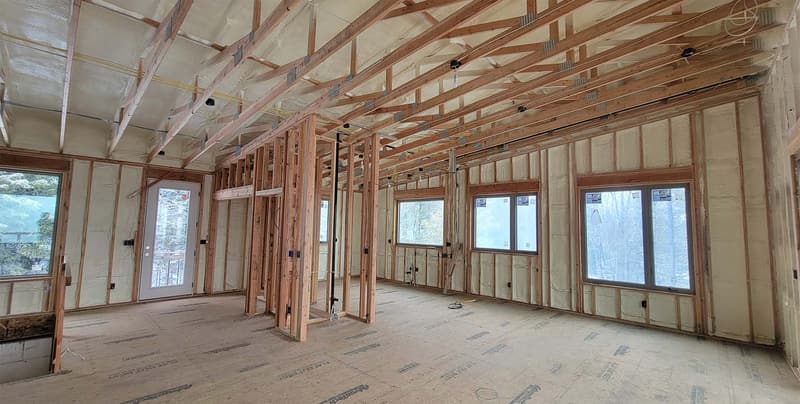
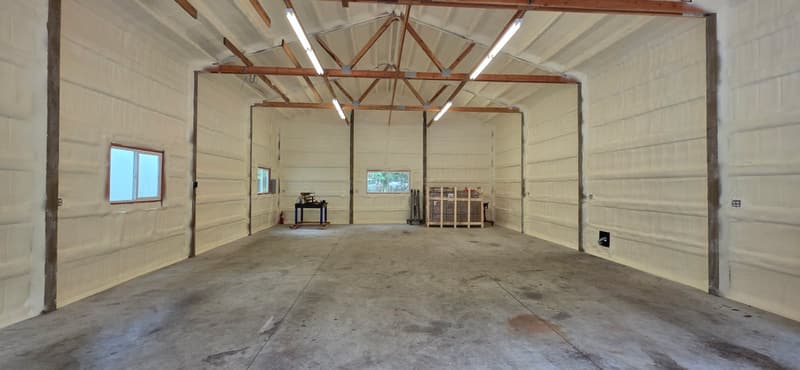
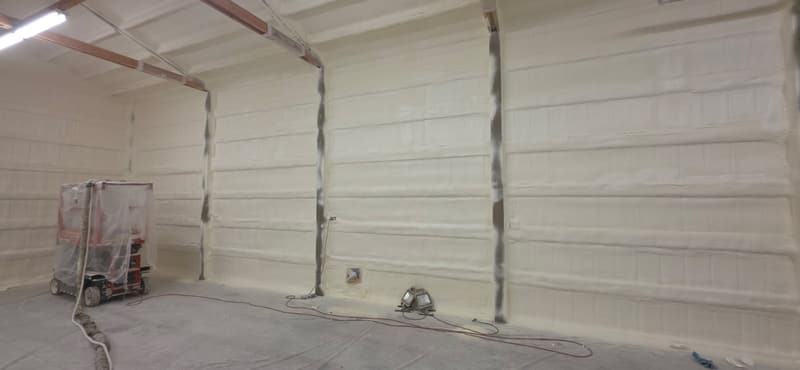
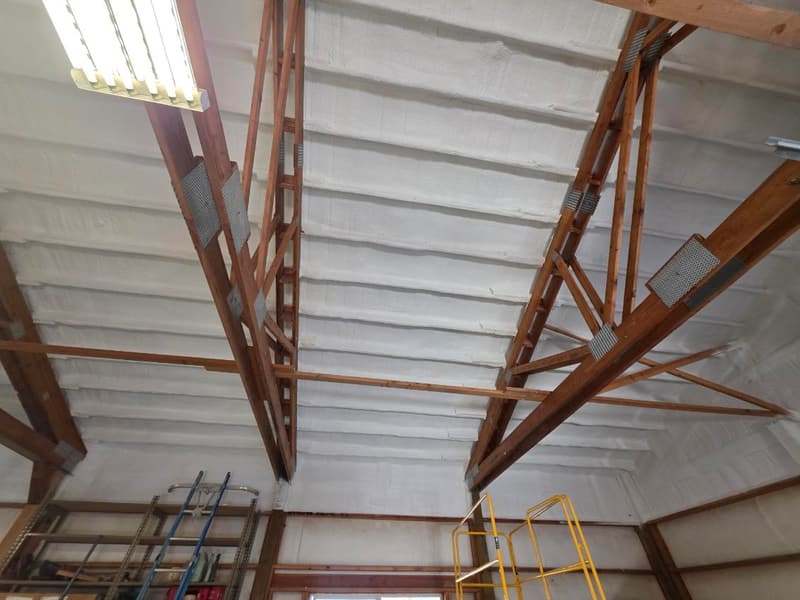
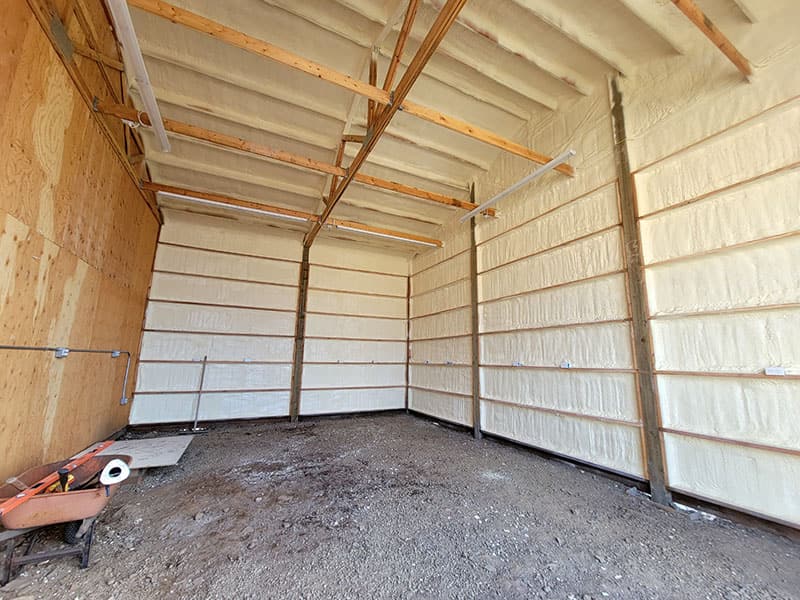
These are Empire's own jobs. Look at how the foam follows the girts and purlins, covers tall walls from the floor up and runs unbroken from the walls into the roof between the trusses.
1 / 4
Want work like this? Request your free estimate
Customer reviews & pricing
-
I've utilized many insulation companies over the years and rarely write reviews, but Nick and his guys did an outstanding job and I would HIGHLY recommend them. Their price was excellent, the work was perfect, and they are extremely clean and organized.
Scott D. · Angi ·
-
Best job and best price
Doug G. · Angi ·
What affects the price
Every pole barn is quoted on its own, and estimates are free. Simple barns can often be quoted from photos and measurements; otherwise Nick gives a rough number first and a firm quote once he has seen the barn. Price comes from the surface sprayed, not the floor size.
| Job | What affects the quote |
|---|---|
| Pole Barn Insulation | Building size, wall and roof area, and foam thickness |
- Wall and roof surface area: Price follows the surface being sprayed, not the floor size. A tall building or a steep roof has more area than its footprint suggests.
- Foam type and thickness: Empire sprays 2-lb and HFO closed-cell. Most heated shops here get 2 inches on the walls and 3 on the roof; cold storage typically gets 4 inches on the walls and 6 on the roof.
- Walls only or walls and roof: Adding the roof adds area. In a pole barn, foam on the roof deck is what lets you insulate it without a drop ceiling and a vented attic.
- Access and site conditions: Open framing, floor state, door openings and how close the rig can get all affect the work.
- Coverings and finish plans: A space people work in may need a thermal barrier over the foam. Empire can paint the foam for a finished look, but paint is not a thermal barrier, and Empire doesn't install drywall.
Your job, your price: Request your free estimate
Questions we get
Should I insulate the walls, the roof, or both?
It depends on how you heat and use the barn. Walls alone make a real difference in a heated shop. The roof is where condensation on the metal usually shows up, and in a pole barn foam is the practical way to insulate it, because the roof deck usually isn't built to be vented the way fiberglass needs. Talk both options through with Nick.
Will spray foam stop my metal roof from dripping?
Foam is how Nick deals with it. Metal moves heat right through it, so when temperatures swing the steel drops below the dew point and water forms. Closed-cell foam sprayed on the panels stops the air and vapor from reaching the cold metal. It won't fix an actual roof leak, so sort any leaks out first.
Why not fiberglass in a pole barn?
Fiberglass is designed for a vented attic, with air moving in at the soffits and out the ridge or gable vents to prevent condensation and mold. Fastened to a pole barn roof deck behind a vinyl backing, it traps moisture: rot, mildew, and insulation that falls down after a few years. A drop ceiling can make fiberglass work, but it adds cost and the trusses may not be built to carry it.
Does the foam need to be covered?
If people will work in the space, usually yes. Spray foam is combustible, and codes generally call for an approved thermal barrier, such as gypsum drywall, between foam and occupied space. Empire can paint exposed foam for a finished look, but ordinary paint is not a thermal barrier. Requirements depend on the product, how the space is used and local code.
What happens on spray day?
Empty the building as much as you can, especially the floor. Whatever stays has to be moved again and again, which slows the job and adds cost. If you physically can't move it all, tell Nick and the crew will help. Most barns get 2 to 3 inches of foam, so spraying can go fairly fast. Everyone else stays out of the work area during spraying, cleanup and the product's re-occupancy period.
What should I send to get an estimate?
Call, text or use the form with the barn's rough size, how you use it and what you want insulated. Photos of the framing help. Simple pole barns can often be quoted from that alone; otherwise Nick gives a rough number first and a firm quote once he has seen it. Estimates are free, and veterans and service members get a discount that depends on the job.
Question not here? Request your free estimate
Pole Barn Insulation across North Idaho
Pick your town for local details.
Start planning your pole barn insulation early
Call or text with the barn's size and how you use it. Simple barns can often be quoted without a visit, and the estimate is free.
What happens next
Request your free estimate
Request an estimate online. Nick handles your estimate himself.