
Spray Foam Equipment & Application Process
Nick Bond sprays Empire's foam himself on Graco equipment with ratio monitoring, which tracks how the two foam components mix while the foam goes on. On request, he can provide an application report showing how much foam was sprayed and at what ratio. Closed-cell foam is the main offering; paint and thermal-barrier coatings are decided by project.
A Graco rig that watches the mix
Spray foam is made on the job from two liquid components that have to mix in the right proportion. Nick sprays with Graco equipment that has ratio monitoring, so the mix is tracked while the foam goes on, not only checked after it has cured.
Nick invested in the rig to give customers peace of mind and back up Empire's expertise with data. It's one part of a careful job: prep, the right product for the assembly, conditions on the day, installed thickness and the installer's experience all matter too. Nick has 8 years of insulation experience and 8 years of construction experience, handles the estimate and sprays the foam himself.
Application reports on request
On request, Nick can provide an application report for a homeowner or contractor. It shows how much foam was sprayed on the job and the ratio it went on at. The foam is meant to be sprayed at one-to-one, so the report is a ratio verification. Commercial and industrial clients are the most likely to want one; if you do, mention it when you ask for your estimate.
Closed-cell first, open-cell by project
Closed-cell foam is our main offering, in 2-lb closed-cell and HFO closed-cell. Open-cell foam can be provided when a specific project calls for it, but Empire generally does not spray it. Which material fits depends on the wall or roof assembly, how you use the space and the product's documentation.
Coatings: paint for a finish, intumescent coating for a thermal barrier
Painting exposed spray foam is a service Empire offers. In a shop or barn it gives the foam a finished look without a drop ceiling or wall covering. Ordinary finish paint is not a thermal barrier, though.
Where foam stays exposed in an occupied space, codes generally call for a thermal barrier. For coatings, Empire offers an intumescent thermal-barrier coating. It's a good choice for commercial and industrial buildings and costs more than regular paint; most owners don't use it in shops or barns. Whether it fits the specific foam, thickness and assembly is decided project by project. Empire doesn't install drywall; that's a separate trade.
Acrylic or silicone roof coatings and tank projects are individual inquiries, not a standard service. Call or text with the details and Nick can tell you whether the project is a fit.
Photos from our jobs
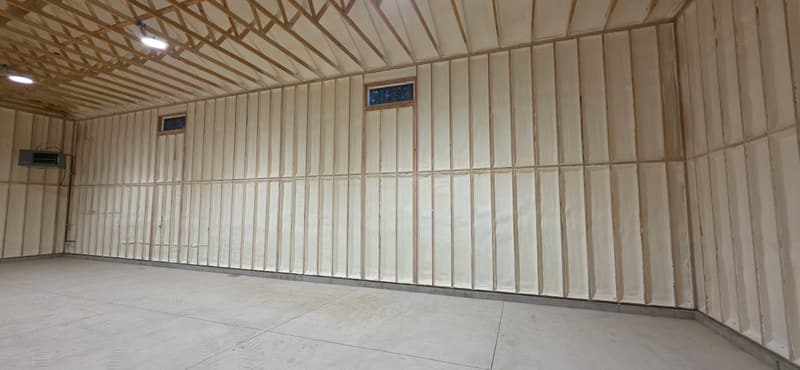
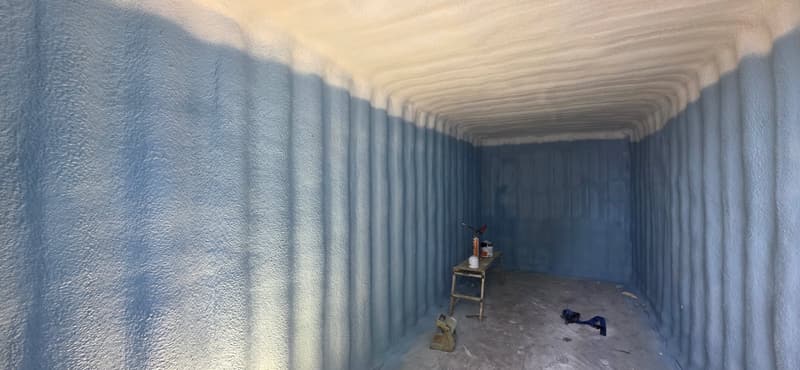
A few of our recent jobs.
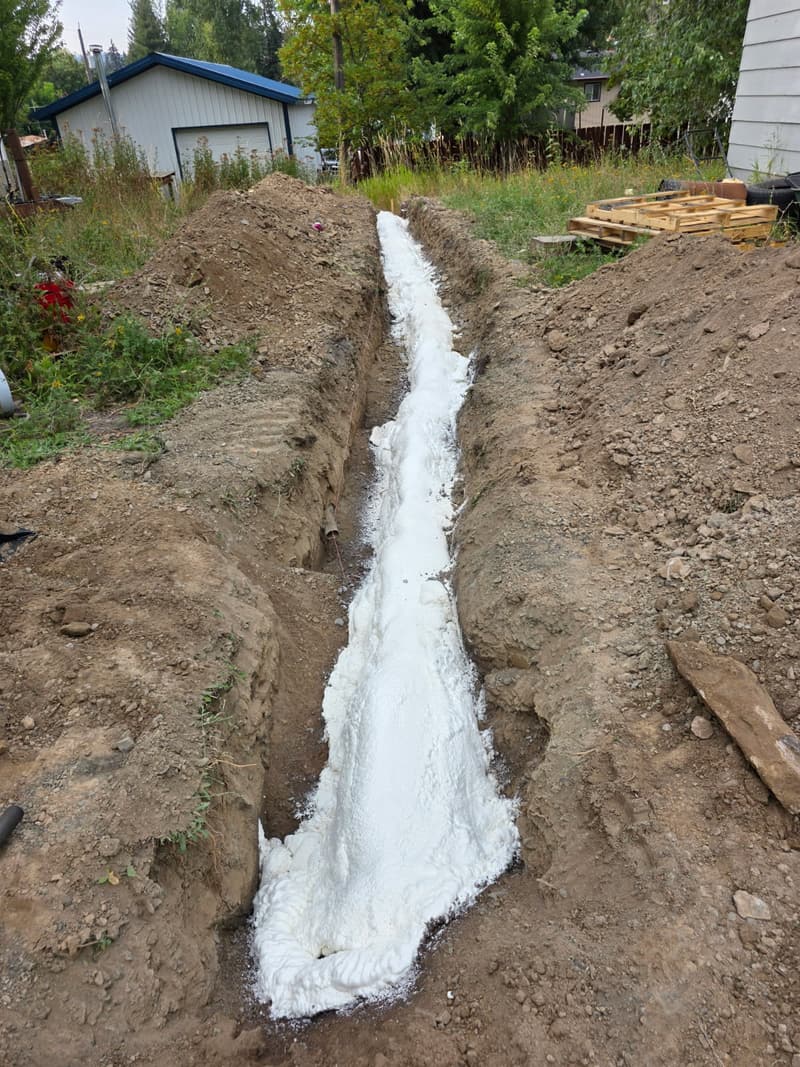
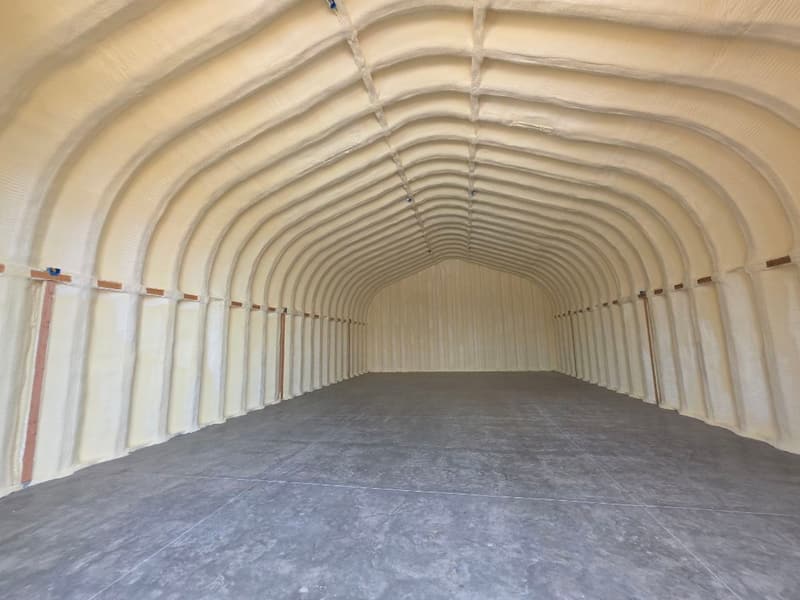
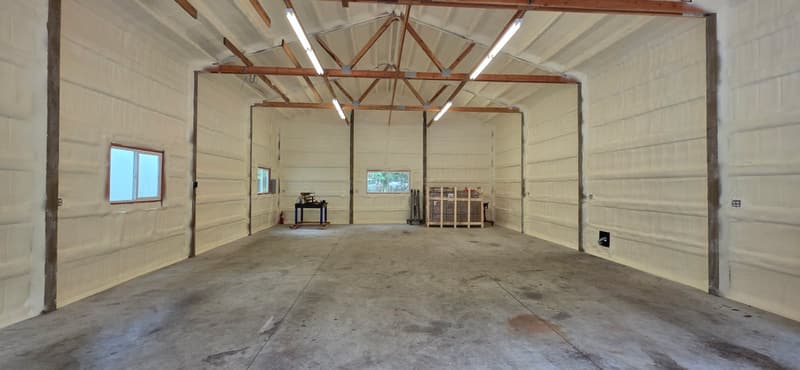
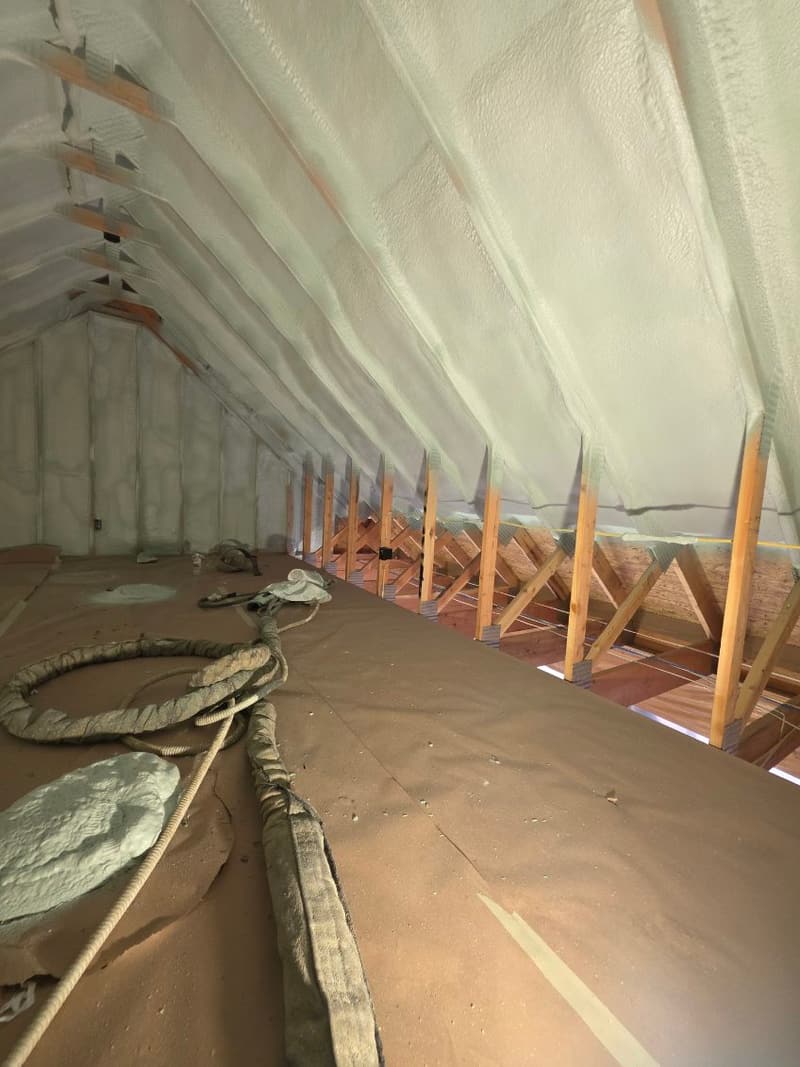
1 / 6
Want work like this? Request your free estimate
Related questions
Does ratio monitoring mean the job comes out right?
It helps, but it is one part of the job. The rig tracks how the two foam components mix while Nick sprays, so the mix can be checked during the work. Prep, product choice, conditions on the day, thickness and experience still matter, which is why Nick handles the estimate and sprays the foam himself.
Can I get an application report for my job?
Yes, on request. Nick can provide an application report for a homeowner or contractor from his ratio-monitored equipment. It shows how much foam was sprayed on the job and the ratio it went on at. Mention it when you request your estimate, so it covers what you need for your records or your builder.
Is painted foam the same as a thermal barrier?
No. Painting exposed foam is a service Empire offers for a finished look; it is not a thermal barrier. For a coating thermal barrier, Empire offers an intumescent coating where it fits the specific foam, thickness and assembly. What your space needs depends on the product, how you use the space and local code.
Do you spray open-cell foam?
Usually not. Closed-cell foam, in 2-lb and HFO, is Empire's main offering. Open-cell can be provided when a specific project calls for it, but Empire generally does not spray it. Describe the building and the assembly, and Nick can tell you which material fits.
Question not here? Request your free estimate
Services
- Closed-Cell Spray FoamMore insulation per inch than open-cell foam, with greater resistance to water vapor. Useful where cavity depth is limited or moisture control matters.
- Shop & Garage InsulationReduce heat loss and drafts in a shop or garage you plan to heat. Foam type and coverage depend on the building and how you use it.
- Pole Barn InsulationInsulate pole barn walls and roofs to reduce heat loss and help manage condensation. The plan should account for ventilation and how the space will be used.
- Crawl Space InsulationSeal air leaks at crawl space walls and rim joists to help with drafts and cold floors. Drainage and ground moisture need their own plan.
- Attic InsulationReduce heat loss through the top of your home. Roof-deck and attic-floor insulation are different approaches; the right choice depends on ventilation and moisture control.
- New Construction InsulationInsulate accessible walls and roof cavities before finishes go in. Plan the foam type, thickness and installation stage with your builder.
- Commercial InsulationInsulation for workspaces, warehouses and other commercial buildings. Plan access, ventilation and time out of the work area before installation.
- Metal Building InsulationClosed-cell foam can help manage condensation on metal panels and reduce heat loss. Surface condition, ventilation and building use guide the installation plan.
- Retrofit InsulationAdding spray foam to existing homes and buildings during remodels, re-roofs or when walls and ceilings are open.
Not sure which fits? Request your free estimate
Request your free estimate
Request an estimate online. Nick handles your estimate himself.
What happens next
Request your free estimate
Request an estimate online. Nick handles your estimate himself.