
Spray Foam Insulation in Harrison, ID
Empire Insulation sprays closed-cell foam in Harrison, working out of St. Maries. Nick Bond quotes your job himself and sprays it with a ratio-monitored rig, whether it is a heated shop, a pole barn with a metal roof, a crawl space or a home. Estimates are free.
Spray foam in Harrison, quoted and sprayed by the owner
Nick Bond prices the job himself, sprays it with one consistent crew member and stays on site from start to finish.
Request your free estimate
Request an estimate online. Nick handles your estimate himself.
Company details
- Owner since April 2022Nick Bond, owner
- 5.0 on Google9 reviews
- Licensed & insuredLicensed in Idaho
- Ratio-monitored rigApplication reports on request
What we do in Harrison
Start with the building, not the product
Most spray foam decisions come down to the building and how you use it. A heated shop needs a tight, insulated shell. A pole barn or metal building needs foam on the steel to keep condensation off it. A home needs a thermal barrier over the foam and a plan for the attic or crawl space. Tell Nick what you have and how you use it, and he will point you to the approach that fits.
Here is how each service fits the buildings people bring to Nick, from heated shops to crawl spaces.
Closed-cell spray foam
Empire installs 2-lb closed-cell and HFO closed-cell foam for residential and commercial work. Closed-cell is dense and can act as a vapor retarder at the thickness the product specifies.
Shop and garage insulation
Walls and ceilings in a working shop or garage. Foam can seal gaps and cut heat loss. Tell us if the framing is exposed and what is stored along the walls.
Pole barn insulation
Foam goes between the girts and purlins on the walls and roof. Open framing makes access easier, and the floor type matters for how we set up.
Crawl space insulation
Crawl-space encapsulation and insulation are both options. Foam does not replace ground-moisture control, so the plan should cover the soil, vents and vapor barrier.
Attic insulation
Foam on the attic floor and foam on the roof deck make different insulated boundaries. A roof-deck approach needs a ventilation and moisture plan worked out first.
New construction insulation
Open walls and roofs are the easiest to spray. Wall assemblies, air sealing, sound control and hybrid insulation packages can be planned before drywall goes up.
Commercial and metal buildings
Closed-cell foam on metal panels can help control condensation when it is part of an appropriate assembly. Shipping containers and monolithic insulation are also project options.
Retrofit insulation
Adding foam to an existing building. Access, finished surfaces and what is already in the cavities shape the scope. Empire does not remove existing insulation.
Not sure what you need? Request your free estimate
Photos from our jobs
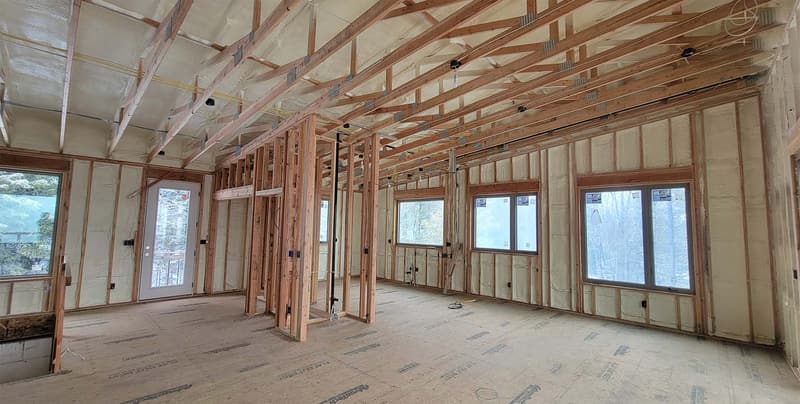
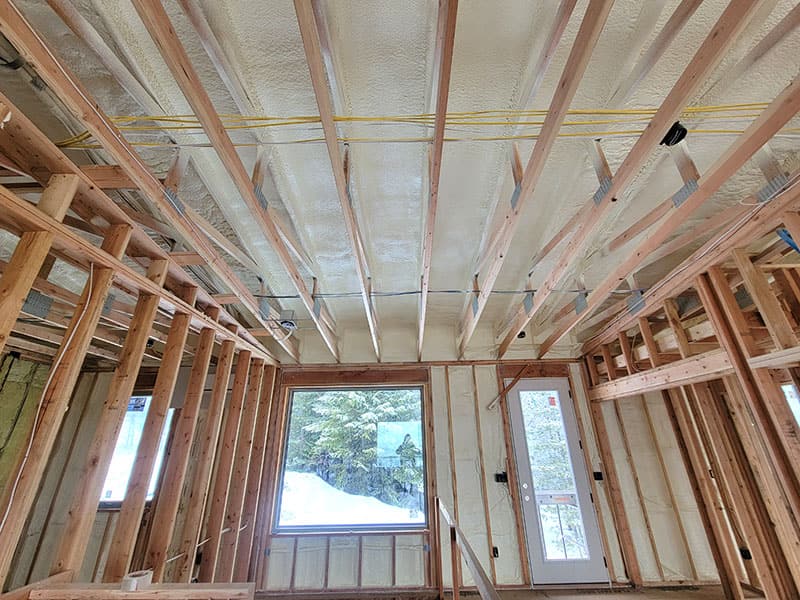
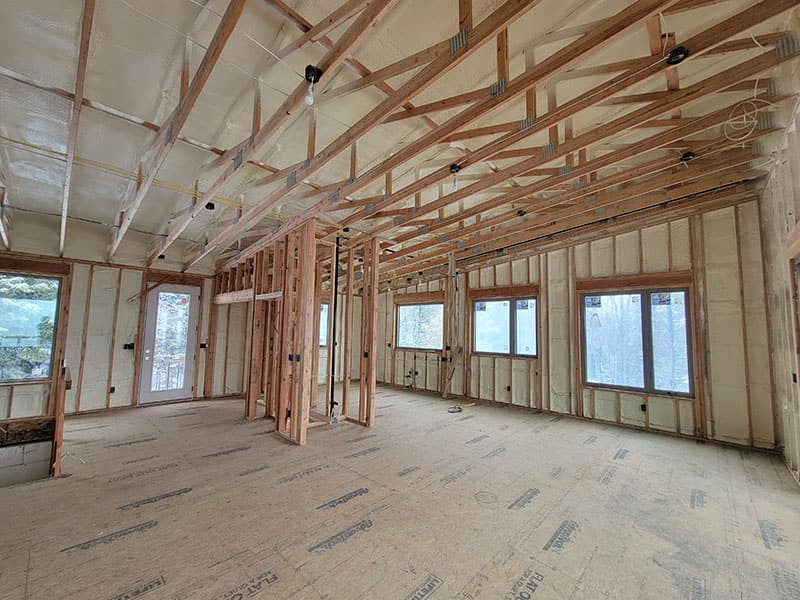
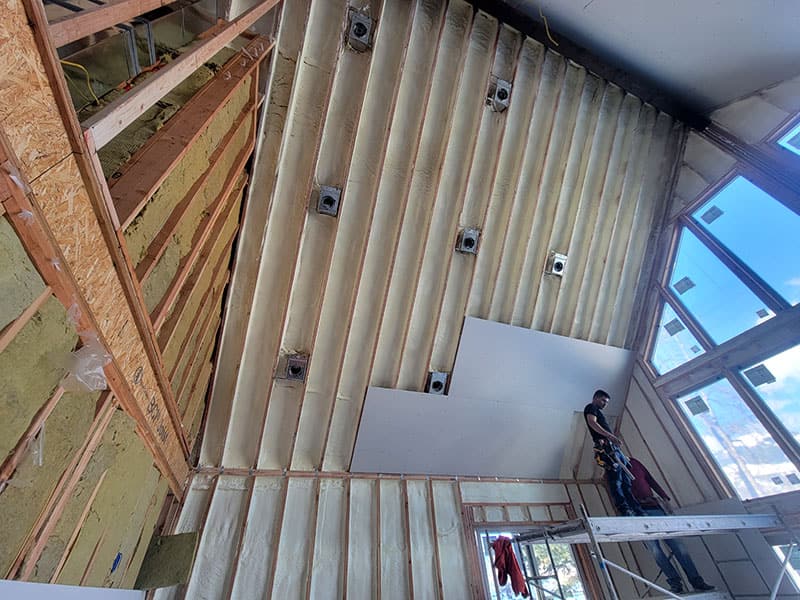
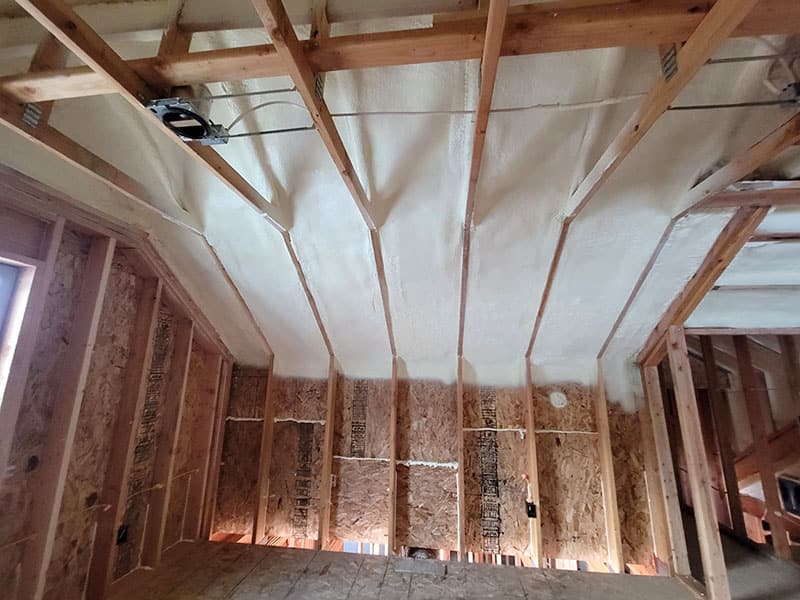
Look at how the foam sits in the framing: around a window and glass door, along a long run of exterior walls, up a tall stairwell and between every rafter of a vaulted ceiling.
1 / 4
Want work like this? Request your free estimate
Customer reviews & pricing
-
I've utilized many insulation companies over the years and rarely write reviews, but Nick and his guys did an outstanding job and I would HIGHLY recommend them. Their price was excellent, the work was perfect, and they are extremely clean and organized.
Scott D. · Angi ·
-
Best job and best price
Doug G. · Angi ·
What affects the price
Every job is quoted on its own, and estimates are free. Price follows the surfaces being sprayed and the thickness, not the floor area. Veterans and service members get a discount that depends on the job.
| Job | What affects the quote |
|---|---|
| Closed-Cell Spray Foam | Area sprayed, installed thickness and access |
| Shop & Garage Insulation | Building size, wall and roof area, and how the space is used |
| Pole Barn Insulation | Building size, wall and roof area, and foam thickness |
| Crawl Space Insulation | Wall and rim-joist area, access and moisture plan |
| Attic Insulation | Insulated boundary chosen, area and access |
| New Construction Insulation | Wall and roof area and the build stage |
| Commercial Insulation | Scope, access and time out of the work area |
| Metal Building Insulation | Steel area covered, surface condition and access |
| Retrofit Insulation | Open areas, access and existing materials |
- Foam type: Closed-cell and open-cell foam differ in density, vapor behavior and how much each inch costs. The right choice depends on the assembly.
- Installed thickness: Thickness is set by the product documentation and the R-value you want. Thicker foam takes more material.
- Wall and roof surface area: Walls, rafters and roof decks add up differently than floor space. Measure the surfaces getting foam, or send building dimensions.
- Access and framing: Exposed framing, tight crawl spaces and cluttered shops change setup time and how much prep is needed.
- Prep and protective coverings: Masking, clearing space and any required thermal or ignition barrier can affect scope. Ask what each estimate includes.
Your job, your price: Request your free estimate
Questions we get
Does Empire Insulation work in Harrison?
Yes. Harrison is in Empire's service area, and the business runs out of St. Maries. Nick Bond travels 100+ miles for projects in Idaho, so call or text with your building details to get started.
How do I know which service fits my building?
Start with use. A heated shop, an unheated pole barn, a crawl space and a metal building each need different coverage. Then consider whether the framing is exposed. New builds and open framing are simplest. Existing finished spaces take more planning around access.
Can you insulate a building I only use part of the year?
Yes. Closed-cell foam resists moisture, which matters in a building that sits cold for stretches, like a seasonal shop or storage building. The plan still depends on how you heat the space when you are there, so describe how you use it.
Does the foam need to be covered?
Often, yes. Spray foam is combustible. Codes generally require an approved thermal barrier, such as 1/2-inch gypsum drywall, between foam and occupied spaces. Some attics and crawl spaces allow an ignition barrier or a tested assembly instead. It depends on the product, use and local code.
What should I send for an estimate?
Call, text or use the form with what the building is, how you use it, its rough size and what you want insulated. Photos of the framing help. Estimates are free, and veterans and service members get a discount that depends on the job.
Question not here? Request your free estimate
Also serving near Harrison
Pick your town for local details.
Have a building in Harrison to insulate?
Call or text Nick with what the building is and how you use it. He quotes it himself, and the estimate is free.
What happens next
Request your free estimate
Request an estimate online. Nick handles your estimate himself.