
Closed-Cell Spray Foam in North Idaho
Closed-cell spray foam is Empire's main offering, in 2-lb and HFO options. It packs more insulation into each inch than open-cell, seals gaps as it goes on and resists water vapor, which suits shops, barns, metal buildings and crawl spaces. Nick Bond quotes your job himself and sprays it with a ratio-monitored rig.
More heat held in every inch of wall and roof
Closed-cell foam insulates, seals drafts and puts a moisture-resistant layer on the framing in one pass, which counts most in shallow walls and on cold metal.
Request your free estimate
Request an estimate online. Nick handles your estimate himself.
Company details
- Owner since April 2022Nick Bond, owner
- 5.0 on Google9 reviews
- Licensed & insuredLicensed in Idaho
- Ratio-monitored rigApplication reports on request
What we handle
Why closed-cell is Empire's standard foam
Shops, pole barns, metal buildings and homes in North Idaho sit through long, cold, snowy winters. Closed-cell foam is built for that. At roughly R-6 to R-7 per inch, against R-3.5 to R-3.8 for open-cell, it holds more heat in a shallow wall. It is dense, it bonds to framing and panels, and it slows water vapor, so warm indoor air has a harder time reaching cold surfaces and turning to water.
Empire sprays 2-lb closed-cell and HFO closed-cell. Which one, and how thick, depends on the building, the area being sprayed and how you heat and use the space. Nick works that out with you before he quotes, so the thickness on your estimate matches what the building needs. Open-cell can be provided for a specific project, but closed-cell is Empire's standard.
On spray day Nick runs the rig himself. Ratio monitoring tracks how the foam components mix while he sprays, and an application report is available on request.
Closed-cell earns its place where heat loss, drafts and moisture show up together. Here is where it helps and what to expect from each.
Heat escaping through thin walls
With more insulation per inch, closed-cell holds more heat in a shallow stud or girt cavity. The final R-value comes from the product and the thickness installed.
Drafts through gaps and seams
Foam is sprayed straight onto the framing and sheathing, so it fills the irregular gaps batts leave open and cuts air leaks in the same pass.
Sweating metal roofs and walls
Closed-cell against cold steel stops the air and vapor drive that make the panels sweat, which fiberglass can't do. It does not fix a roof leak.
Damp crawl spaces
Because it resists vapor, closed-cell is one part of crawl-space encapsulation. Ground water and drainage still need their own fix.
Walls that need a vapor retarder
At 1.5 to 2 inches, closed-cell reaches a Class II vapor retarder, which is what you want in a wall. Not every assembly wants one, so talk it through with Nick.
Steel shipping containers
Containers are on Empire's project list. Foam on the steel walls and roof insulates and seals the inside in one pass.
Not sure what you need? Request your free estimate
Photos from our jobs
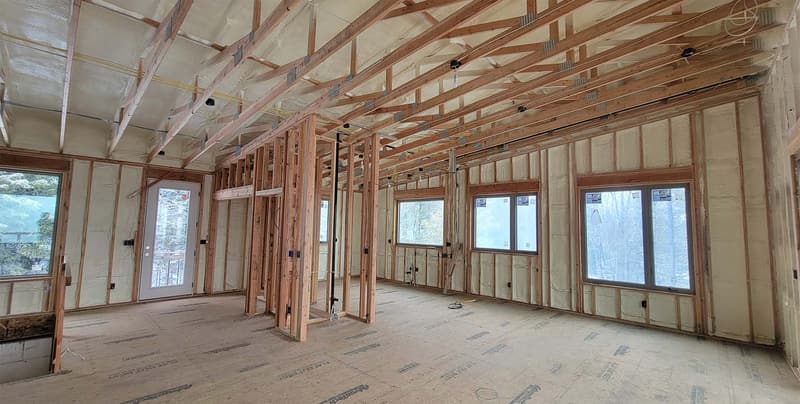
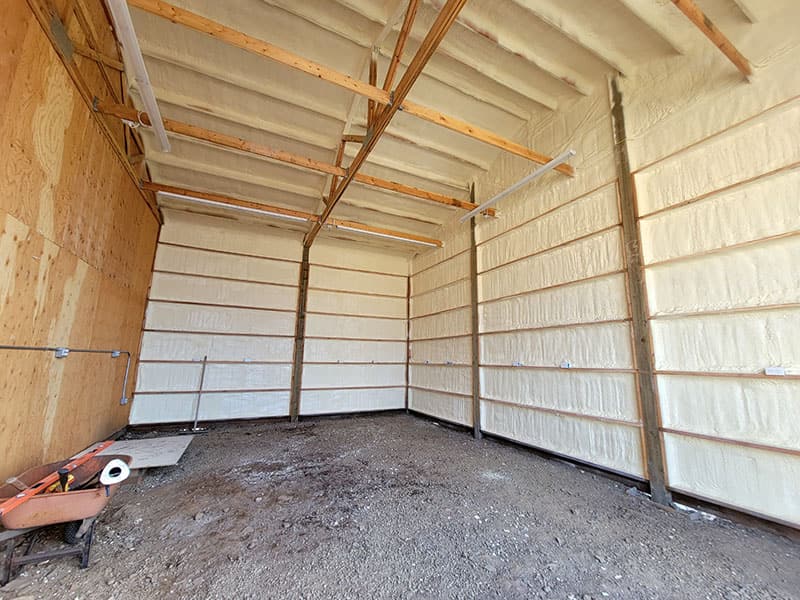
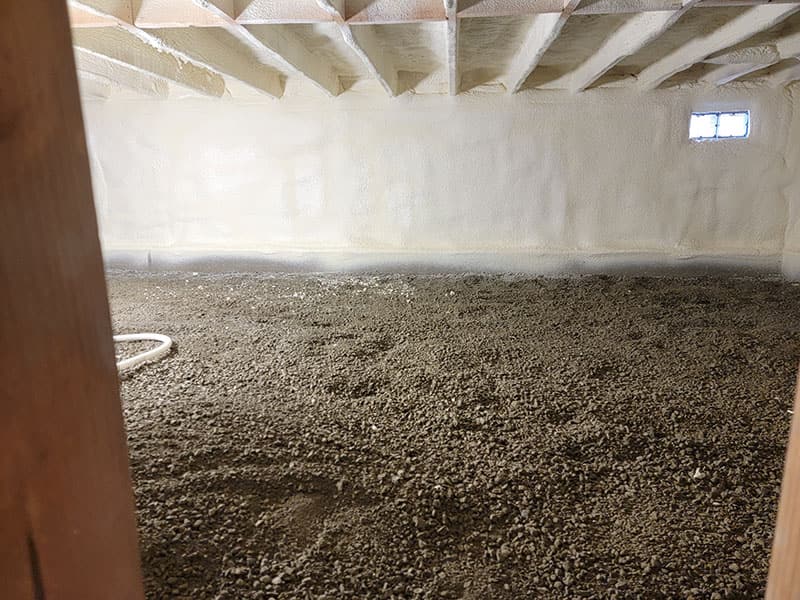
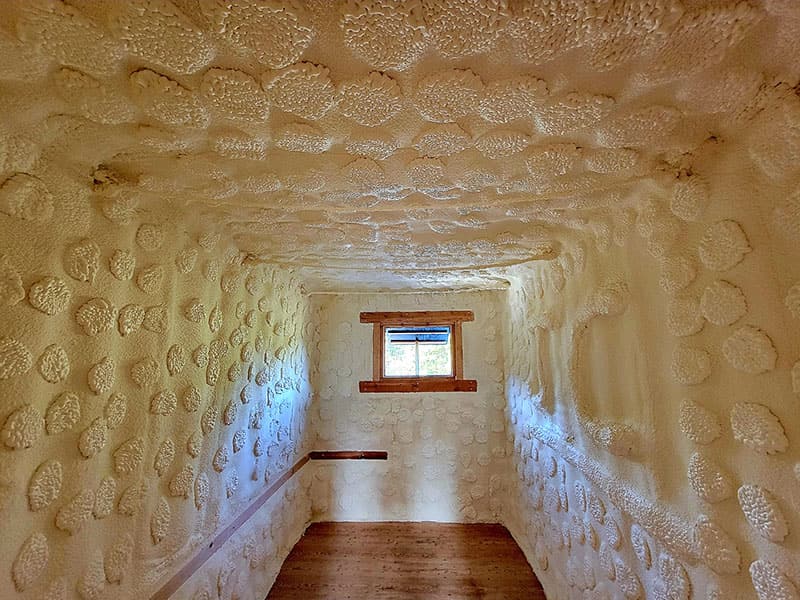
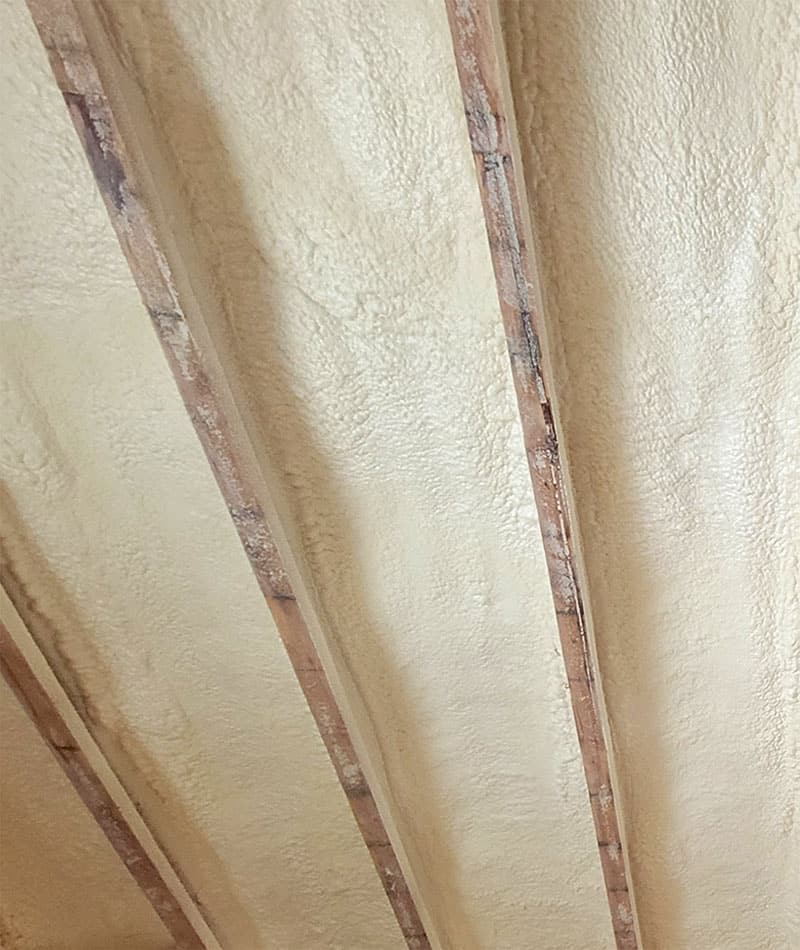
These are Empire's own jobs. Look at how the foam fills around the framing, covers walls and ceilings without gaps and leaves a smooth, even surface.
1 / 4
Want work like this? Request your free estimate
Customer reviews & pricing
-
I've utilized many insulation companies over the years and rarely write reviews, but Nick and his guys did an outstanding job and I would HIGHLY recommend them. Their price was excellent, the work was perfect, and they are extremely clean and organized.
Scott D. · Angi ·
-
Best job and best price
Doug G. · Angi ·
What affects the price
Closed-cell jobs are quoted one at a time, and estimates are free. The number follows the area sprayed, the thickness installed and access, not the floor size.
| Job | What affects the quote |
|---|---|
| Closed-Cell Spray Foam | Area sprayed, installed thickness and access |
- Area sprayed: Walls and roofs are priced by the surface being sprayed. A tall building or steep roof has far more area than its footprint suggests.
- Installed thickness: Two inches is Nick's usual minimum. Most heated shops get 2 on the walls and 3 on the roof; cold storage gets 4 and 6. More inches means more material and more R-value.
- 2-lb or HFO closed-cell: Empire sprays both. The choice depends on the building and the assembly, and it can change material needs.
- Access and framing: Open framing and easy reach spray fastest. Tight crawl spaces, high roofs and stored equipment take more setup.
- What the estimate covers: When you compare quotes, check that each covers the same areas and thickness, and whether prep and any required covering are included.
Your job, your price: Request your free estimate
Questions we get
How much R-value does closed-cell foam give per inch?
Closed-cell foam typically runs roughly R-6 to R-7 per inch, against roughly R-3.5 to R-3.8 for open-cell. Those are general ranges. The real figure depends on the product and the thickness installed, so it comes from that product's data sheet. Nick can tell you what thickness your building calls for.
How thick should the foam be?
It depends on the project. Two inches is Nick's minimum around here; at 1.5 to 2 inches closed-cell reaches a Class II vapor retarder. A heated shop usually gets 2 inches on the walls and 3 on the roof, and cold storage 4 on the walls and 6 on the roof. Six inches is usually the most, though where Washington code calls for R-49 it takes seven to eight.
Is closed-cell foam waterproof?
No. It resists water vapor and can act as a vapor retarder at the thickness the product specifies, but that is not waterproofing. It will not fix a roof leak, stand in for drainage or keep ground water out of a crawl space. Sort out those problems first, then insulate.
Does the foam need to be covered?
Often, yes. Spray foam is combustible, so codes generally require an approved thermal barrier, such as gypsum drywall, between foam and occupied space. Some attics, crawl spaces and tested assemblies follow different rules. The answer depends on the product, how you use the space and local code.
What happens on spray day?
Empty the building as much as you can, especially the floor. Whatever stays has to be moved again and again, which slows the job and adds cost. If you physically can't move it all, tell Nick and the crew will help. Nick sprays the foam himself with one consistent crew member and stays on site start to finish. Everyone else stays out of the work area during spraying, cleanup and the product's re-occupancy period.
What should I send to get an estimate?
Call, text or use the form with what the building is, how you use it, its rough size and the areas you want insulated. Photos of the framing help. Nick gives a rough number from that and a firm quote once he has seen the job. Estimates are free, and veterans and service members get a discount that depends on the job.
Question not here? Request your free estimate
Closed-Cell Spray Foam across North Idaho
Pick your town for local details.
Find out what closed-cell foam will do for your building
Call, text or use the form with what the building is and how you use it. Nick quotes it himself, and the estimate is free.
What happens next
Request your free estimate
Request an estimate online. Nick handles your estimate himself.