
New Construction Insulation in North Idaho
Empire Insulation sprays closed-cell foam in new homes, shops and commercial builds across North Idaho while the wall and roof framing is still open. Nick Bond quotes the job himself, sprays it with one consistent crew member and can give you an application report from his ratio-monitored rig on request. Settle foam type, thickness and spray stage before drywall.
Get the insulation right while the framing is still open
Plan foam type, thickness and spray stage with Nick before drywall. Closed-cell foam insulates and air-seals the shell in one pass.
Request your free estimate
Request an estimate online. Nick handles your estimate himself.
Company details
- Owner since April 2022Nick Bond, owner
- 5.0 on Google9 reviews
- Licensed & insuredLicensed in Idaho
- Ratio-monitored rigApplication reports on request
What we handle
Lock in the foam before the walls close
On a new build, the window for spray foam is short. Once the framing is up and before the drywall goes on, every wall and roof bay is open and easy to reach. Miss that window and access gets harder, the job gets bigger and the insulation plan is hard to change.
Settle the foam type, thickness and spray stage early with Nick and your builder or designer. Empire installs 2-lb closed-cell and HFO closed-cell foam, and the target thickness comes from the product documentation, your assembly and local code. If the roof deck gets foam, plan the ventilation and moisture control alongside it. Drywall is a separate trade: Empire doesn't install it.
Empire works directly with builders. Give Nick at least two weeks' notice if you can; the more heads-up the better, because build schedules are always changing. Tell him when the drywall is coming, and Empire will be done before it's delivered. Nick does everything in his power to meet deadlines, including working weekends, and he quotes and sprays the job himself with one consistent crew member.
The window before drywall is the easiest time to insulate. These are the parts of a build where foam does the most, and what to plan for.
The window before drywall
Foam goes into every open wall bay while you can still reach it. Once the drywall is up, access gets harder and the job gets bigger.
Air leaks at seams and framing gaps
Foam fills the gaps around framing, windows and penetrations that other insulation can miss, so the finished building starts out tighter.
Roof and vaulted ceiling framing
Closed-cell foam can go on the roof deck or between the rafters of a vaulted ceiling, insulating and sealing the top of the building in one pass.
New shops, garages and pole barns
New metal and pole buildings get foam on the walls and roof before any liner goes up, which helps control condensation on the panels as part of the right assembly.
Barndominiums and pole-built homes
A pole-built home is cheap up front, but its roof deck is hard to ventilate for fiberglass, so foam is often the only option. Price it in before you build.
Homes and commercial builds
Empire sprays residential and commercial projects. Wall assemblies, vapor barriers and air sealing can be part of the plan.
Hybrid packages and sound control
A hybrid package, part spray foam and part fiberglass, can cut the cost, and sound control between rooms is an option. Bring those goals up while the framing is open.
A record of the application
On request, Nick's ratio-monitored rig can produce an application report for the builder or homeowner: how much foam went on and the ratio it was sprayed at.
Not sure what you need? Request your free estimate
Photos from our jobs
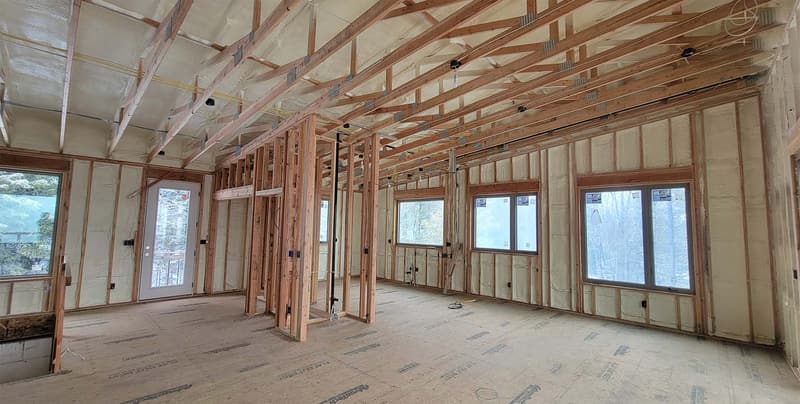
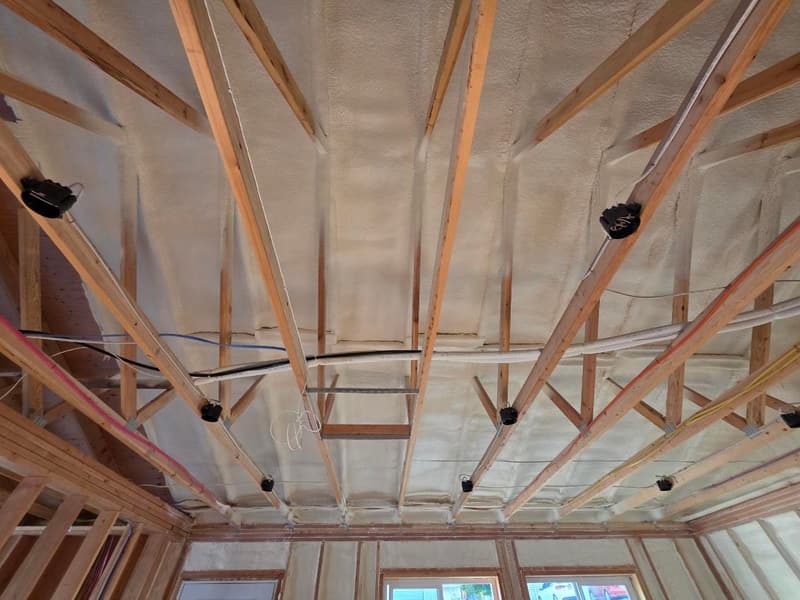
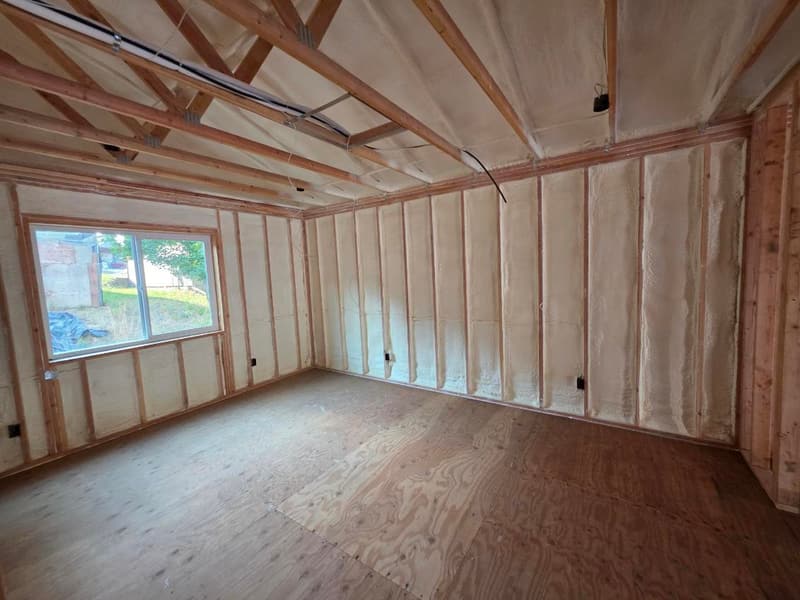
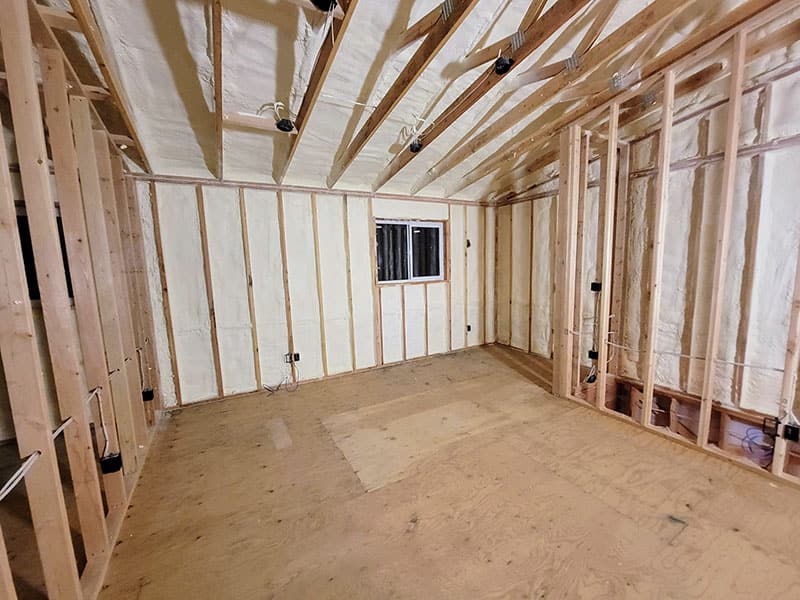
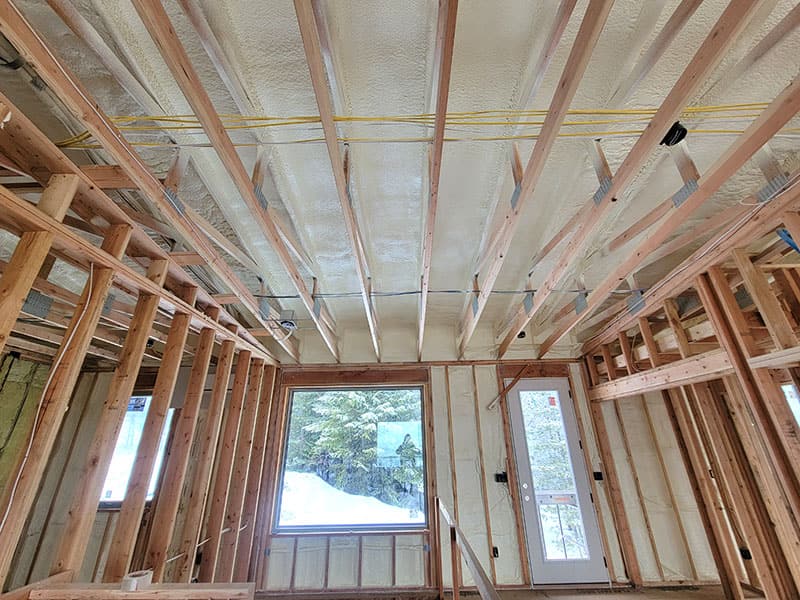
These are Empire's own jobs. Look at how the foam fills the stud bays around windows and a glass door, covers the roof deck above open ceiling framing and works around the wiring and light boxes.
1 / 4
Want work like this? Request your free estimate
Customer reviews & pricing
-
I've utilized many insulation companies over the years and rarely write reviews, but Nick and his guys did an outstanding job and I would HIGHLY recommend them. Their price was excellent, the work was perfect, and they are extremely clean and organized.
Scott D. · Angi ·
-
Best job and best price
Doug G. · Angi ·
What affects the price
Every build is quoted on its own, and estimates are free. Price follows the wall and roof area being sprayed and the build stage, not the floor area alone, so a tall wall or vaulted roof adds more than its footprint suggests.
| Job | What affects the quote |
|---|---|
| New Construction Insulation | Wall and roof area and the build stage |
- Wall and roof surface area: A tall wall, a vaulted ceiling or a roof deck has more surface than floor area suggests. Foam is priced on the surface it covers.
- Foam type and thickness: Empire installs 2-lb closed-cell and HFO closed-cell. Target thickness depends on the product documentation, your assembly and local code.
- Build stage: Empire needs to be done before the drywall is delivered. Tell Nick where framing is, when drywall is booked, and give at least two weeks' notice if you can.
- Access and framing: Open, reachable framing sprays faster than tight or obstructed areas. Tell us how the site is reached.
- Protective coverings and prep: Foam may need a thermal barrier or ignition barrier depending on the space. Empire doesn't install drywall; it's a separate trade, so plan who covers the foam.
Your job, your price: Request your free estimate
Questions we get
When does the foam go in during the build?
After framing and before drywall. Empire needs to be done before the drywall is delivered, so tell Nick when it's coming. Book at least two weeks ahead if you can; the more notice the better, because build schedules are always changing. Settle the foam type and thickness with Nick and your builder before anyone closes up the walls.
What foam and thickness should we plan for?
Empire installs 2-lb closed-cell and HFO closed-cell foam. Two inches is Nick's minimum around here; at 1.5 to 2 inches closed-cell reaches a Class II vapor retarder, which is what you want in a wall. Six inches is usually the most he sprays, but where Washington code calls for R-49 it takes seven to eight. Settle the target with Nick, your designer and the product documentation.
Does spray foam need to be covered with drywall?
Usually, in occupied space. Spray foam is combustible, and codes generally call for an approved thermal barrier, such as 1/2-inch gypsum drywall, between foam and occupied space. Some attics and crawl spaces allow an ignition barrier instead. Your plans and local code decide what applies.
What happens on spray day?
Nick sprays with one consistent crew member and stays on site throughout. Other trades stay out of the work area during spraying, cleanup and the product's re-occupancy period, so plan the schedule around it. Ask for the return instructions when you book.
Can I get an application report for the job?
Yes, on request. Nick's Graco rig monitors the foam ratio while he sprays, and the application report shows how much foam was sprayed on the job and the ratio it went on at. Ask for it when you book, and it can go straight into the project file.
What should I send to get an estimate?
Call, text or use the form with the town, building type, rough dimensions, the areas to insulate and where framing stands. Plans or photos of the framing help. Nick gives a rough number from that and a firm quote once he has seen the job. Estimates are free, and Nick travels 100+ miles for projects in Idaho.
Question not here? Request your free estimate
New Construction Insulation across North Idaho
Pick your town for local details.
Get foam on the schedule before drywall
Give Nick at least two weeks' notice if you can. Call, text or use the form with the build, its town and where framing stands.
What happens next
Request your free estimate
Request an estimate online. Nick handles your estimate himself.